OroraTech books 10 more thermal payloads on Kepler's Tranche 2, taking its hosted fleet on the optical relay operator to 15
New Kepler agreement grows the hosted fleet from four streaming sensors to 15 by 2028; with 20 satellites already in orbit and up to 96 payloads reserved on other fleets, OroraTech is building toward a 15-minute revisit rate of new fires by 2030.
OroraTech books 10 more thermal payloads on Kepler's Tranche 2, taking its hosted fleet on the optical relay operator to 15
New Kepler agreement grows the hosted fleet from four streaming sensors to 15 by 2028; with 20 satellites already in orbit and up to 96 payloads reserved on other fleets, OroraTech is building toward a 15-minute revisit rate of new fires by 2030.
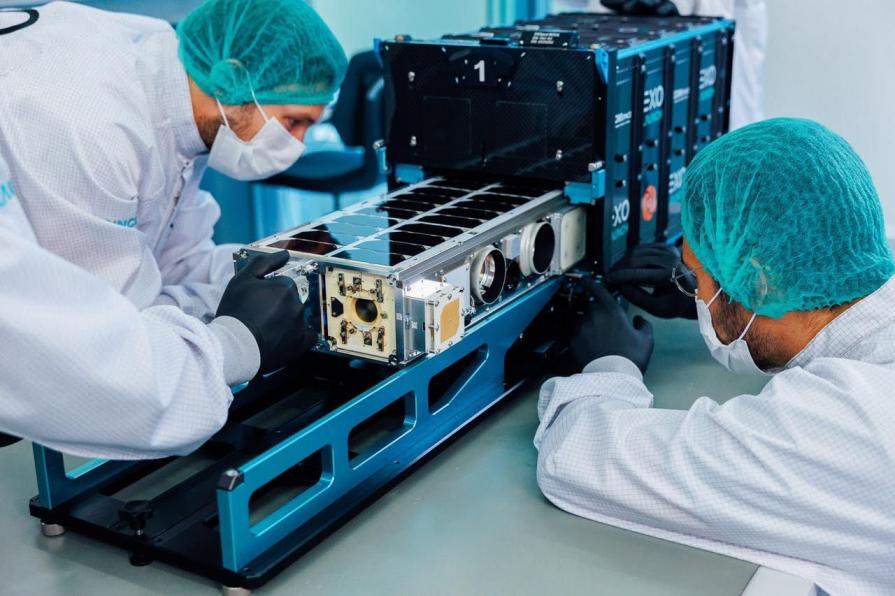
SAN FRANCISCO - November 4, 2026 - OroraTech has signed a new hosted-payload agreement with Kepler Communications to fly 10 additional SAFIRE Gen4 thermal infrared sensors on Kepler's Tranche 2 optical relay satellites, scheduled to deploy in early 2028. The agreement follows the four sensors launched on Kepler's first tranche on Jan. 11, 2026, which reached first light on May 15th, and a fifth sensor manifested on a Kepler-hosted mission in 2027.
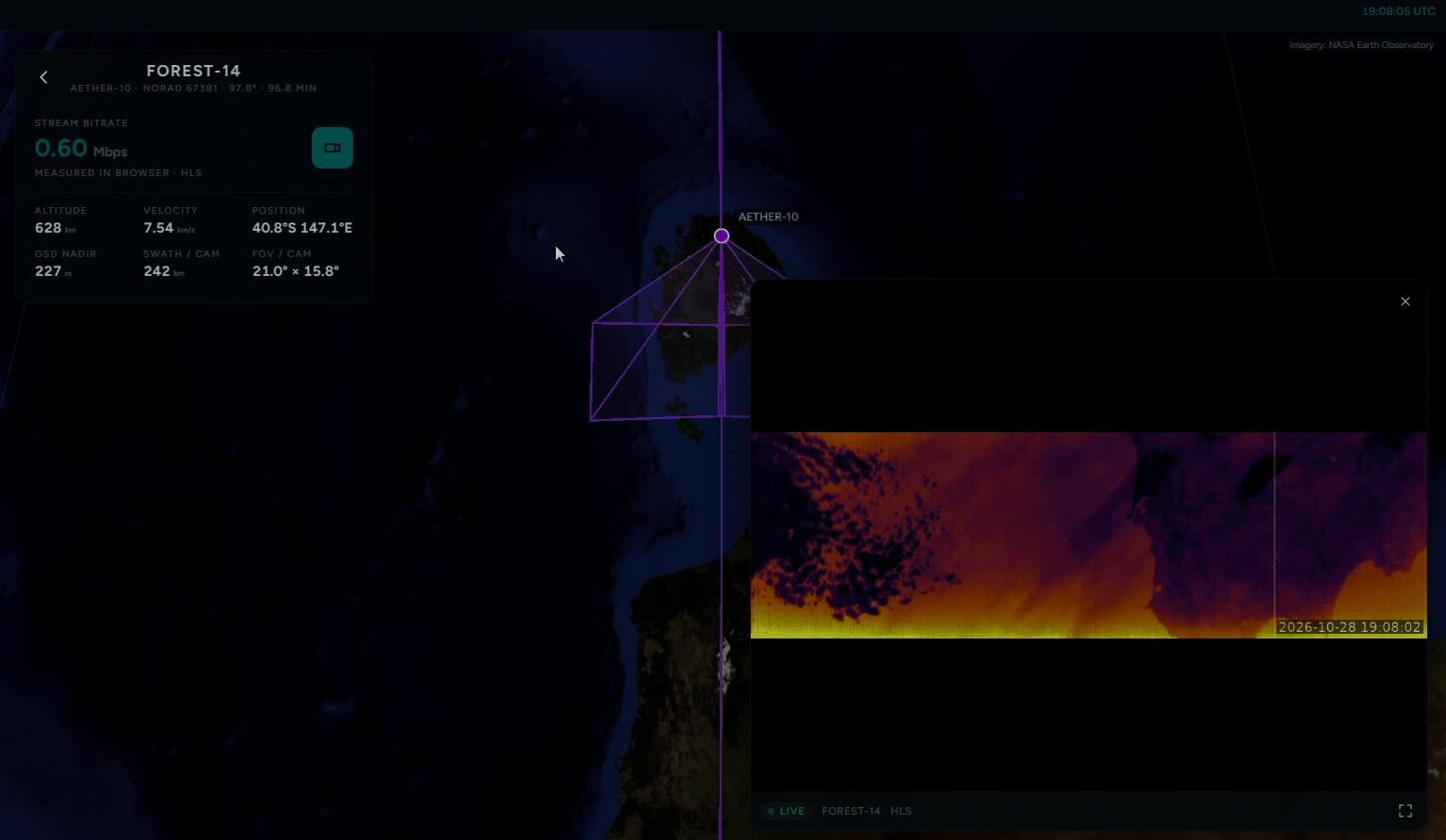
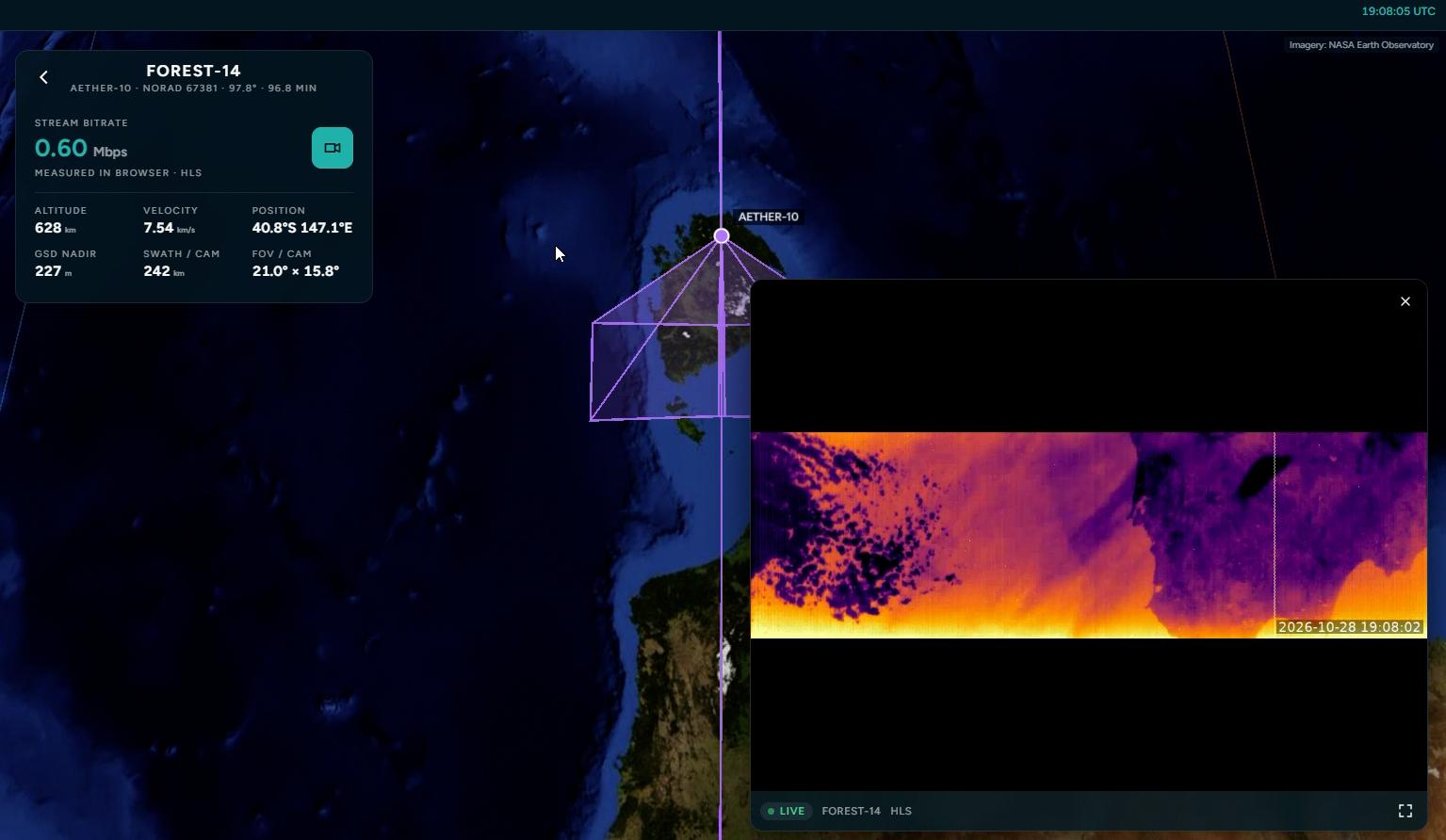
Adding 10 more sensors on Tranche 2 means OroraTech will have 15 thermal payloads on Kepler satellites that downlink continuously over inter-satellite optical links, so imagery reaches the ground within minutes of acquisition instead of waiting for a ground-station pass. OroraTech USA is demonstrating a live thermal stream from the current Kepler sensors at the Red Sky Summit conference in San Francisco, CA today, showing the capability of combining these two technologies.

"OroraTech was the first customer to put a live sensor on The Kepler Network, and will be the first to demonstrate live thermal data streaming from orbit," said Beau Jarvis, Chief Revenue Officer at Kepler. "Hosting ten additional payloads on Tranche 2 will expand their capability, enabling more persistent collection and delivery of critical data. This is exactly the kind of mission Kepler’s constellation was designed for: persistent access to high-value sensor data, delivered in real time."

"Persistence is not one satellite's job. It is the number of sensors over the right latitudes at the right hour, and how fast the data gets to the ground," said Ignacio Zuleta, Chief Technology and Product Officer at OroraTech. "Our current Kepler payloads do that today. Tranche 2 gives us a scale we could not reach by launching our own satellites alone."
The Kepler-hosted sensors join 20 OroraTech satellites and sensors already in orbit, 18 of them launched in the last 2 years with the most recent, FOREST-20, being launched on October 1st. The company also recently announced that up-to 96 OroraTech payloads are reserved on Eutelsat's future LEO constellation in the coming years.
Geostationary (GEO) satellites provide frequent wildfire observations but at low resolution, while polar-orbiting satellites offer greater detail with significant gaps between passes. OroraTech is working to close this gap with a growing constellation of compact SAFIRE Gen4 thermal sensors, which captures imagery at 200-meter resolution. By combining more frequent observations with faster data transmission through optical communications, OroraTech aims to detect smaller fires earlier and deliver actionable intelligence to first responders. On May 15, a OroraTech sensor onboard a Kepler satellite demonstrated this capability by detecting a fire that went unobserved by other low-Earth-orbit satellites during its roughly 100-minute duration, confirmed with GEO data.
OroraTech is announcing the agreement at Red Sky Summit, the invitation-only wildfire-technology gathering in San Francisco, where it is presenting its constellation roadmap to fire agencies, utilities and insurers.
Grübler and Dr. Zuleta will attend Red Sky Summit alongside OroraTech's commercial and product teams. Attendees are invited to visit the company's booth at the FireTech Showcase to see a demo live stream of thermal hotspot data from space and meet with the team to discuss the future of satellite-based wildfire detection and monitoring.
About OroraTech
OroraTech is a global leader in space-based thermal intelligence. Headquartered in Munich, Germany, the company develops, manufactures and operates thermal infrared satellite technology and transforms thermal observations into actionable intelligence for governments, civil protection organizations and commercial customers. OroraTech operates the world's largest commercial thermal infrared satellite constellation, supporting applications including wildfire intelligence, critical infrastructure monitoring, environmental intelligence, and emerging security applications.
About Kepler
Kepler Communications Inc. is a space infrastructure provider on a mission to deliver real-time access to space data. With 33 satellites launched to date, Kepler operates the first commercial optical data relay constellation, enabling real-time, continuous space connectivity while supporting advanced on-orbit compute and hosted payload capabilities. Kepler has achieved industry-leading milestones, including the first commercial on-orbit demonstration of SDA-compatible optical inter-satellite links and successful space-to-air and space-to-ground optical communication demonstrations. Headquartered in Toronto, Canada, Kepler is building a global company to enable the future space economy.
Read more from OroraTech

Watching Quebec's forests - working hand in hand with SOPFEU
ICEYE partners with OroraTech to deliver full-lifecycle wildfire intelligence