OTC-P1 Wildfire Detection Goes Global: Where It's Live Now
OTC-P1 Wildfire Detection Goes Global: Where It's Live Now
OTC-P1, OroraTech's Constellation Phase-1, is the world's first and only operational commercial satellite constellation built specifically for wildfire detection and management. Its thermal data is now active across Europe, North America, South America, and Australia - supporting fire agencies, forestry operators, and utilities in high-risk regions. Global rollout is ongoing, with new territories being added as fast as OroraTech's ground infrastructure and satellite capacity can allow.
Wildfire risk does not respect borders, seasons, or grid boundaries. For fire services operating across large service territories, that reality has always been the hardest part of wildfire mitigation. Cameras and ground sensors can only watch what is in front of them. Meteorologists can only forecast conditions, not confirm ignition. What has been missing is a consistent, wide-area view that updates regularly and does not depend on line-of-sight.
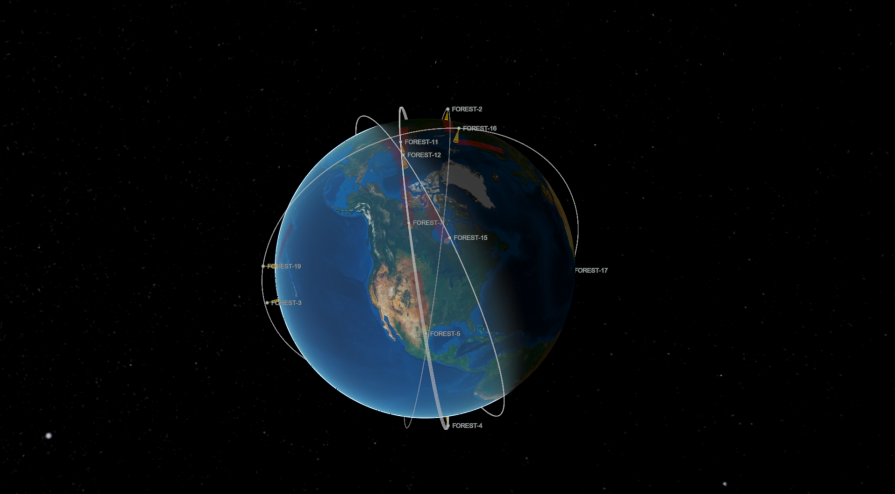
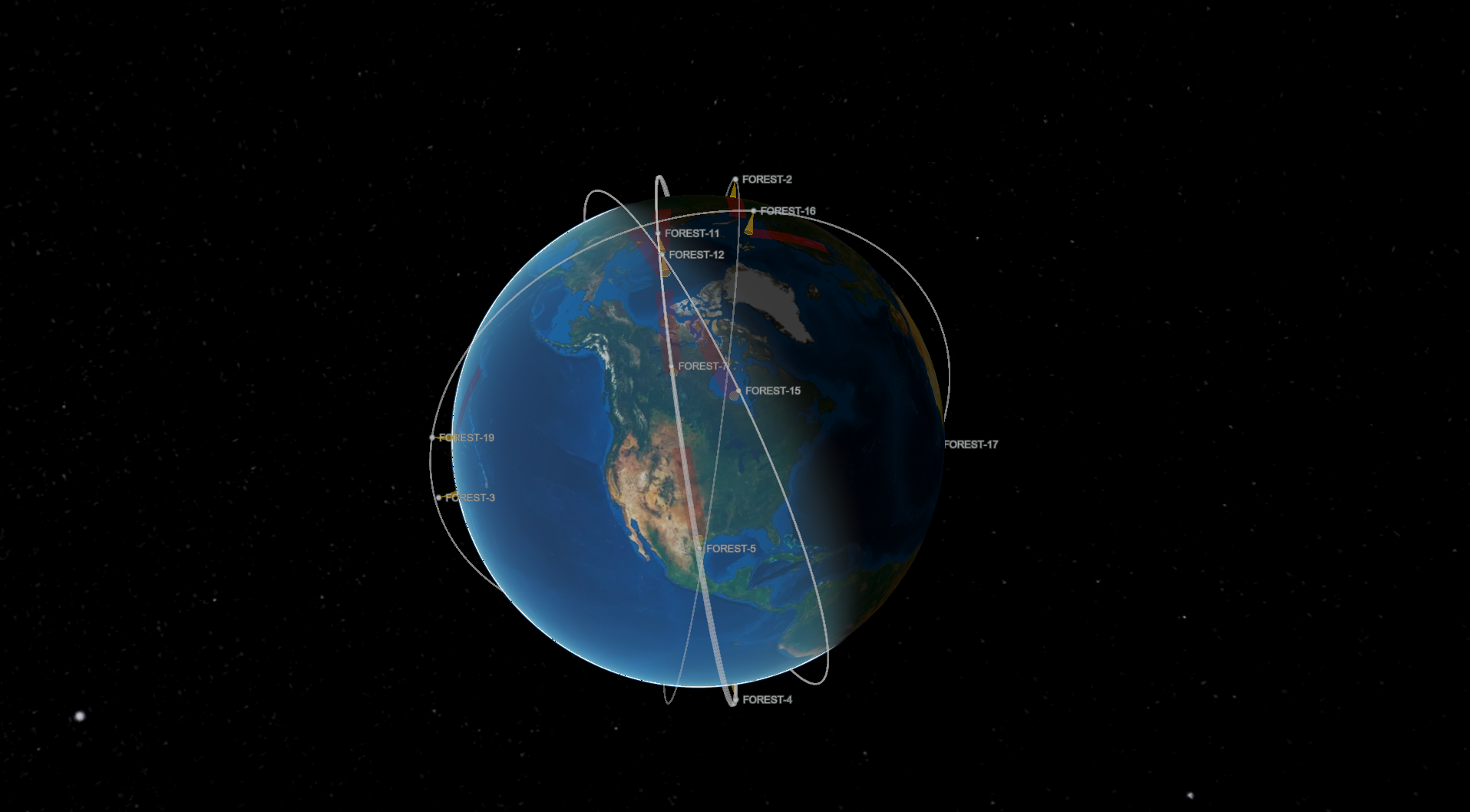
That is the gap that we are aiming to close. OroraTech Constellation Phase-1 - OTC-P1 is the company's first full commercial orbital plane of eight satellites, flying in an afternoon Sun-Synchronous Orbit. In simple terms, that means the satellites pass over the same regions at consistent daily times, at a time when no other satellite constellation flies, capturing thermal infrared imagery that can detect fire activity well before other systems can detect it.
While still in beta, OTC-P1 is operational, and it is expanding by the month. Below is where that coverage currently stands, region by region.
What is OTC-P1, and why does it matter for wildfire response?
OTC-P1 are eight of OroraTech's proprietary thermal satellites. They add their data to Wildfire Solution, together with the date of more than 25 public satellite sources, to deliver near real-time fire detection. In total, we operate 19 (and counting) proprietary thermal satellites and sensors in low-Earth orbit - more than any other country or company. That fleet, together with public data from NASA, the European Space Agency (ESA), and more, protects more than 407 million hectares (roughly 1 billion acres) of forest and growth land worldwide - an area larger than the European Union.
Faster detection means faster response. Faster response means less time for a fire to spread into forest land, threaten transmission infrastructure, or trigger a large-scale emergency response Thermal detection is not a replacement for ground crews or weather stations - it is the layer that tells crews where to look and how urgently to respond.
Europe
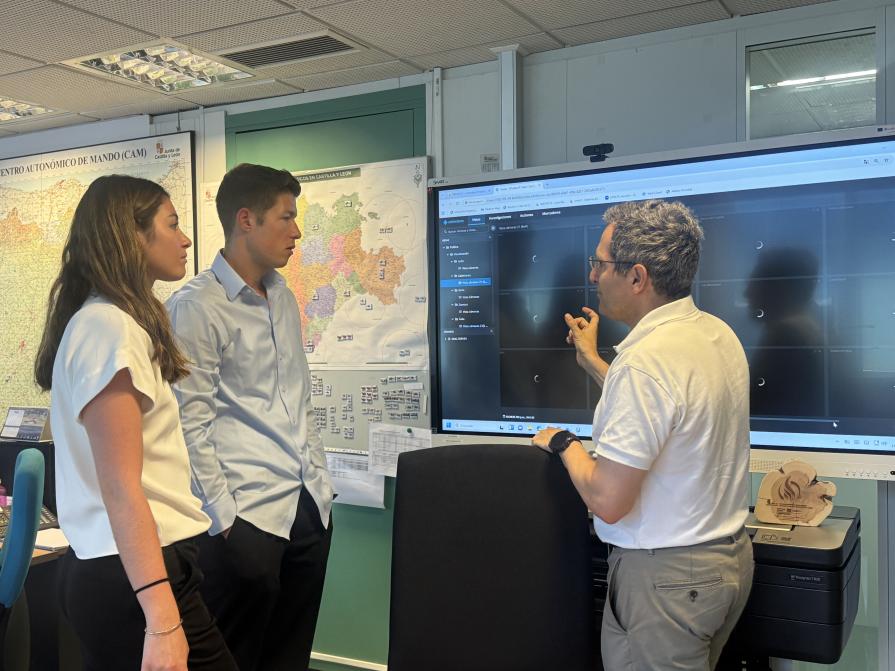
Europe has become one of the most densely covered regions for OTC-P1. Active countries include Slovenia, Austria, Croatia, Spain, Germany, Portugal, Greece, Italy, and France. Within Spain, coverage extends specifically to the autonomous communities of Castilla y León and Castilla-La Mancha - two regions that have faced increasing fire severity in recent years.
Greece deserves a separate mention. Its coverage is reinforced by the dedicated Hellenic Fire Satellite (HFS) System, a four-satellite constellation built by OroraTech specifically for the Greek Ministry of Digital Governance under a €20 million agreement with the European Space Agency. Together with OTC-P1 and the remainder of the network, we support Greece closely with wildfires.
North America
In North America, OTC-P1 supports Canada in Quebec, across Western United States, and more. We're expanding here every day, because we believe this is where we can make the biggest impact. North America, and particularly in the west, are where the wildland-urban interface (WUI) risk is high and where fire fighters, in particular, face mounting pressure to demonstrate proactive detection capability under evolving wildfire mitigation plans.
For agencies in North America, the practical benefit is coverage that does not stop at a service boundary. A fire igniting outside a monitored perimeter is still a fire that can reach it. Continuous regional coverage, rather than site-specific monitoring, is what closes that gap. This matters most in exactly the conditions that make WUI fires dangerous: wind-driven spread can carry an ignition across jurisdictional lines faster than any single agency's monitoring footprint can react.
South America
South America is an important region for OroraTech, with large managed forest landscapes already supported through our Wildfire Solution and OTC-P1 already providing data across parts of the region. In Colombia, Argentina, Chile, and Brazil, we provide local companies and agencies with OTC-P1 data to monitor plantation and forest land, and it includes some of the largest managed forest landscapes that we monitor.
This region is populated by commercial forest, but the need is largely identical: large land areas, high asset value, and a need for detection that does not depend on staff physically patrolling every hectare.
This being said, we can and will do better. We are continuing to roll out even more coverage to the rest of the continent day-by-day. Our satellites controllers and mission specialists at our mission control in Munich are expanding coverage as fast as possible to the needs of this region.
Australia
OTC-P1 coverage in this region currently includes Australian territories with well-documented histories of extreme fire seasons, supporting fire agencies and other growth customers in this region. Australia's fire seasons are among the most destructive on record. The 2019–2020 Black Summer fires burned more than 18 million hectares, killed an estimated 3 billion animals, and destroyed thousands of homes. OTC-P1 coverage in this region is designed to support exactly these conditions - large, remote landscapes where ground-based detection systems routinely fall short.
Asia
Asia represents one of the clearest areas of growth for OTC-P1. The region's combination of tropical forest cover, large managed land operations, and increasing fire risk makes it a natural fit for space-based thermal detection. In Indonesia, we already support a large agribusiness operating across significant areas of managed land. That relationship is an early signal of what regional demand looks like - and of how quickly the need for wide-area, continuous thermal monitoring is growing across Southeast Asia. Coverage here is at an earlier stage than in Europe or the Americas, but the foundation is in place and expanding.
What's next for OTC-P1's global rollout?
OTC-P1 already spans five continents, but the rollout is not finished. OroraTech has 550+ users across six continents using its Wildfire Solution platform, and additional regions are being onboarded continuously as overpass capacity comes online. Africa is a prime place for growth, as well as large parts of Asia, South America, and some parts of Europe.
For fire agencies and companies evaluating wildfire detection technology, that expansion trajectory matters as much as current coverage. A platform still scaling globally is one built for long-term operational alignment, not a fixed service area.
Coverage today is broad. Coverage next year will be broader. That is the point of a constellation designed to keep growing.
Frequently Asked Questions
What is OTC-P1?
OTC-P1 is OroraTech Constellation Phase-1, the world's first satellite constellation built specifically for wildfire detection and management. It consists of a full orbital plane of eight CubeSats flying in an afternoon Sun-Synchronous Orbit, capturing thermal infrared data used to detect fire activity in near real time.
Which countries currently have OTC-P1 coverage?
Active coverage includes North America, Australia, Europe, and parts of Asia & South America. Rollout is ongoing across all regions, so this list continues to expand.
Is OTC-P1 the same as the Hellenic Fire Satellite System?
No. The Hellenic Fire Satellite (HFS) System is a separate, dedicated four-satellite constellation built for the Greek Ministry of Digital Governance. It complements the broader OTC-P1 network but operates as its own mission, with its own orbit and revisit schedule.
Who uses OTC-P1 data?
Customers span government fire agencies, environmental organizations, forestry companies, insurers, and utilities. OroraTech reports more than 110 customers across six continents as of its most recent published figures.
Why does satellite thermal detection matter for utilities specifically?
Utilities often manage large, rural service territories where ground-based cameras and sensors cannot provide full coverage. Satellite thermal detection fills that gap, offering continuous regional monitoring that supports faster response and helps meet regulatory requirements under wildfire mitigation plans.
How is OTC-P1 data different from public data like NASA FIRMS?
Public systems like NASA FIRMS are free, globally available, and genuinely useful — but they are built for other missions. Fire detection is a secondary output, and delivery delays can run from 30 minutes to several hours. OTC-P1 satellites fly specifically in the fire observation gap - the afternoon window when fire risk peaks and few other satellites pass. That orbit timing is deliberate. OroraTech's Wildfire Solution combines OTC-P1 data with more than 25 public sources, including NASA and ESA feeds, processed through AI-driven analytics to deliver actionable alerts rather than raw data points. Public data is one input. OroraTech's platform is the system built around it, providing many streams of data to wildfire practitioners.